A Guide to Calistoga's Most Historic Vineyards
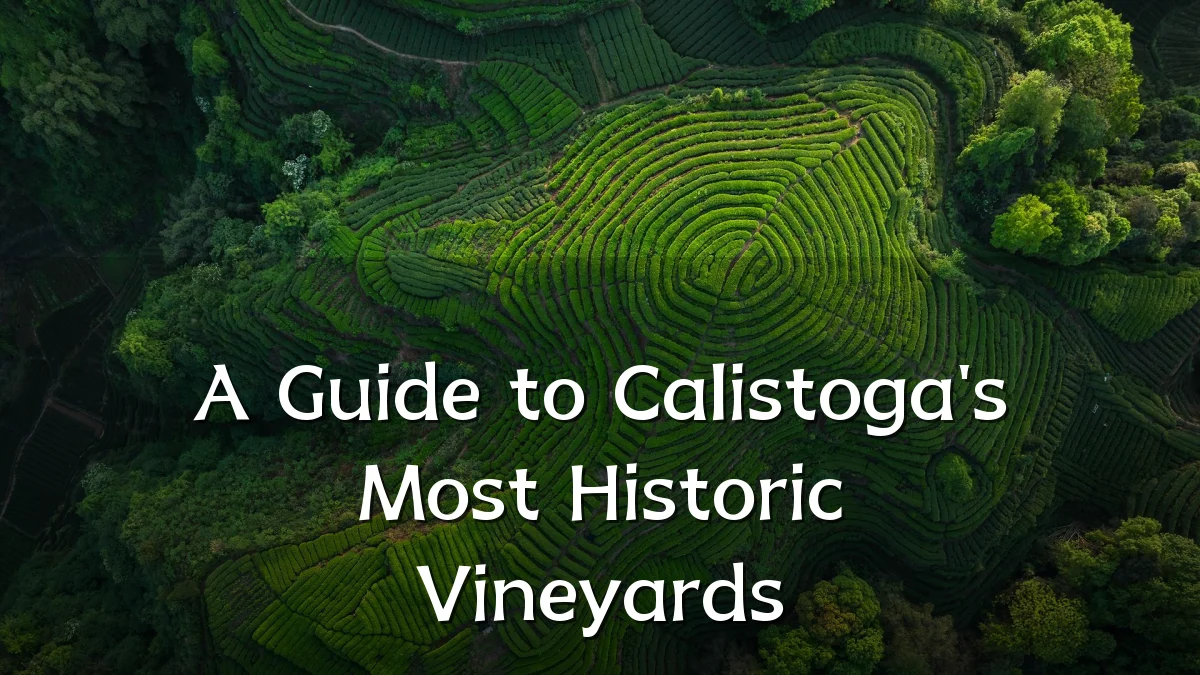
Calistoga, at the northern tip of Napa Valley, combines geothermal geology with a winemaking legacy stretching back more than a century. This analysis examines the factors shaping the region's most historic vineyards today, from shifting consumer behavior to preservation challenges.
Recent Trends
In the past several growing seasons, historic Calistoga vineyards have drawn renewed attention for several observable shifts:

- Climate adaptation — Warmer nights and sporadic heat spikes are prompting growers of old vines to adjust canopy management and irrigation timing. Some have begun interplanting additional drought‑tolerant rootstock near heritage blocks.
- Small‑lot demand — Wineries sourcing from historic sites increasingly release limited bottlings of single‑varietal wines aged in neutral oak, appealing to collectors seeking expression of place.
- Regenerative practices — A handful of estate vineyards now use sheep grazing, compost teas, and minimal tillage to improve soil health without disrupting mature root systems.
- Tourism recalibration — Visitor interest has moved from large tasting rooms to guided walking tours of original vine rows, often paired with geothermal well talks.
Background
Calistoga’s vineyard history begins in the mid‑19th century, when early settlers recognized the valley’s volcanic ash soils and warm days tempered by marine influence. Key background points include:

- Founding estates — Several properties date to the 1860s and 1870s, including plantings by Beringer, Schramsberg, and Château Montelena, though many original vines were replanted after Prohibition.
- Volcanic terroir — Free‑draining volcanic loam and fractured basalt give wines pronounced mineral structure, distinguishing them from neighboring appellations.
- Old‑vine resilience — A few blocks planted in the early 20th century survive, primarily Zinfandel and Carignane, valued for their concentrated flavors and low yields.
- Appellation recognition — Calistoga became a formal American Viticultural Area in 2010, covering roughly 6,000 acres, of which a small fraction is designated as historic.
User Concerns
Visitors and wine enthusiasts evaluating historic Calistoga vineyards often raise practical questions. Common concerns include:
- Authenticity — How much of the vineyard remains original versus replanted? Only a handful of estates can claim continuous cultivation; many parcels have been re‑grafted or re‑blocked.
- Accessibility — Several historic sites are not open to the public without an appointment or are accessible only through private tours. Advance booking is often required.
- Price expectations — Limited‑production wines from old vines typically carry a premium, often in the upper range of the region’s pricing spectrum. Consumers should verify tasting fees and shipping options.
- Farm vs. winery — Some of the most historic vineyard land is owned by growers who sell fruit to multiple producers, not by a single winery, making direct tasting difficult.
Likely Impact
Observing current trajectory, the following outcomes are plausible for Calistoga’s historic vineyards over the coming five to ten years:
- Increased preservation incentives — Local land trusts and conservation easements may expand to protect contiguous patches of old vines from subdivision or replanting with high‑yield rootstock.
- Stylistic evolution — Warmer growing seasons could push ripeness levels higher, prompting winemakers to pick earlier or blend with cooler‑site fruit to maintain acidity and balance.
- Visitor experience diversification — More historic properties may offer structured seasonal open days, row‑walking seminars, or archived wine library tastings to accommodate demand without overwhelming the sites.
- Cost pressures — Rising land values and water scarcity may challenge the economic viability of low‑production historic blocks, potentially leading to price increases or stewardship partnerships.
What to Watch Next
Stakeholders and observers should monitor these developments in Calistoga’s historic vineyard sector:
- Replanting decisions — Whether owners of older vineyard blocks choose to retain or replace Zinfandel and Carignane with Cabernet Sauvignon, which commands higher market returns.
- Regulatory updates — County requirements for riparian buffers and groundwater monitoring could affect irrigation strategies on steep, volcanic slopes.
- New mapping initiatives — Soil and historic parcel mapping projects may formalize what constitutes a “historic” vineyard, influencing labeling and tourism marketing.
- Collaborative archives — Groups of historic vineyard owners may pool resources to document vine genetics, pruning systems, and harvest records, creating a shared resource for education and research.