From Prohibition to Precision: The Evolution of Modern Vineyard Technology
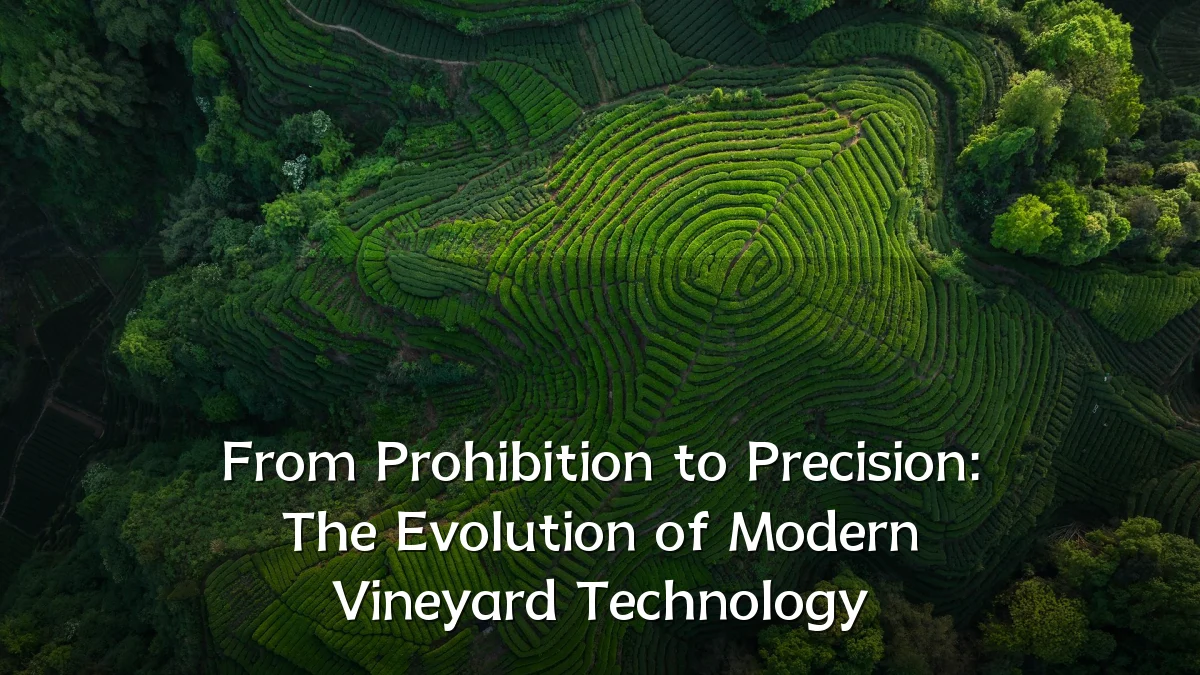
The journey from the era of Prohibition to today’s data-driven vineyards reflects a profound shift in how vines are managed. Where early 20th-century restrictions forced growers to abandon or replant entire regions, the contemporary vineyard is shaped by sensors, software, and selective mechanization. This analysis examines recent trends, historical context, and what the next phase of precision viticulture may hold.
Recent Trends in Vineyard Technology
Over the past decade, technology adoption has accelerated beyond basic drip irrigation and GPS mapping. Growers now integrate multiple data streams to monitor vine health and microclimate in real time.

- Remote sensing – Drones and satellites capture multispectral imagery to detect water stress, nutrient deficiencies, or pest pressure before symptoms become visible.
- Variable-rate application – Sprayers and irrigation systems adjust input volume—water, fertilizer, pesticide—based on soil maps and canopy vigor.
- Automated pruning and harvesting – Mechanical harvesters with optical sorters reduce labor dependence while improving selectivity.
- Internet of Things (IoT) networks – Wireless soil moisture probes and weather stations feed data into cloud-based dashboards accessible from a smartphone.
- Artificial intelligence – Machine learning models predict yield, disease risk, and optimal harvest windows by combining historical records with current sensor data.
Background: From Survival to Science
The modern trajectory traces back to the early 1900s, when widespread vineyard dismantling during Prohibition reshaped the industry. After repeal, growers focused on rebuilding with high-yielding, disease-resistant varieties. Mid-century saw the introduction of trellis systems and basic mechanization, but data collection remained manual and infrequent.

Key milestones included the shift to post-driven trellising in the 1960s, the precision-agriculture movement of the 1990s that brought GPS-guided tractors, and the digital integration of the 2010s that tied soil samples to satellite imagery. Each step reduced guesswork, but the cost and complexity of early systems limited adoption to well-funded estates.
User Concerns: Adoption Hurdles
While technology promises efficiency, many vineyard operators—especially smaller or family-run estates—face significant barriers.
- Upfront investment – Full sensor arrays, drone programs, and AI platforms can require tens of thousands of dollars, with payback periods ranging from three to eight years.
- Data literacy – Interpreting NDVI maps, evapotranspiration rates, and predictive models demands training that not all crews have.
- Infrastructure reliability – Remote vineyards may lack stable cellular or Wi-Fi coverage, forcing reliance on costly satellite links or local storage.
- Privacy and data ownership – Growers worry about third-party platforms retaining or selling their vineyard-level data to competitors or regulatory bodies.
- Technology replacement cycles – Rapidly evolving hardware can become obsolete within three seasons, putting continual pressure on budgets.
Likely Impact: Efficiency Versus Equity
The adoption of precision tools is reshaping vineyard economics and environmental outcomes. On the positive side, water use declines by up to 30 percent in typical variable-rate irrigation setups, and chemical drift is reduced through targeted applications. Quality indicators such as berry sugar levels and phenolic ripeness become more uniform across blocks.
However, the gap between large, capital-rich operations and smaller growers appears to be widening. Smaller vineyards that cannot afford high-tech systems may struggle to compete on yield consistency or sustainability certifications, pushing consolidation. Labor roles are also shifting: fewer manual pruners and pickers are needed, but demand rises for agronomists, data technicians, and equipment operators.
What to Watch Next
The next five to ten years will likely see several developments that mainstream current niche technologies or create new ones.
- Fully autonomous equipment – Robotic pruners and weeding platforms are in field trials; commercial availability may begin within a three-to-five-year window for specific tasks.
- Climate-adaptive tools – Models that integrate long-range weather forecasts with soil moisture data to recommend planting or irrigation adjustments will become more reliable.
- Blockchain for traceability – Provenance tracking from vine to bottle could meet consumer demand for transparency, though cost and standard-setting remain unresolved.
- Regulatory shifts – Water rights restrictions and pesticide bans in several wine regions may accelerate adoption of precision delivery systems that prove compliance.
- Low-cost open-source platforms – Several university and cooperative programs are developing affordable sensor kits and dashboards, potentially lowering entry barriers for small growers.